


The Complete Guide to Refrigerated Vehicles (2026)
Everything businesses need to know about refrigerated vans, trucks, cold chain compliance, fleet management & temperature-controlled transport.

Contents
Why refrigerated transport matters more than ever
What is a refrigerated vehicle?
The seven core components of a refrigerated vehicle
Refrigerated vs insulated vehicles: what's the difference?
Understanding ATP construction
Why vehicle specification matters
How Refrigerated Vehicles Actually Work
Why insulation matters just as much as refrigeration
Why temperature consistency matters
Types of Refrigerated Vehicles
Chilled vs Frozen vs Multi-Temperature Vehicles
Single-Temperature vs Multi-Temperature Vehicles
Industries That Depend on Refrigerated Vehicles
Cold Chain Logistics Explained
Refrigerated Vehicle Regulations in the UK
Electric Refrigerated Vehicles
Telematics & Smart Refrigerated Vehicles
Choosing the Right Refrigerated Vehicle
Common Mistakes to Avoid with Refrigerated Vehicles
Whether it's fresh food arriving on supermarket shelves, life-saving medicines reaching hospitals, or temperature-sensitive products being delivered across the UK, refrigerated vehicles play a critical role in keeping modern supply chains moving.
Far more than simply "cold vans", today's refrigerated vehicles are highly engineered mobile environments designed to maintain precise temperatures, protect product integrity and support compliance with increasingly demanding food safety, pharmaceutical and transport regulations.
For many businesses, choosing the right refrigerated vehicle has become a strategic operational decision. Fleet managers must balance payload, temperature performance, compliance, fuel efficiency, maintenance requirements and total cost of ownership, all while ensuring products remain within strict temperature tolerances throughout every journey.
At the same time, the industry itself is changing rapidly. New refrigerant regulations, advances in telematics, electrification, AI-driven fleet management and evolving cold chain standards are reshaping how refrigerated transport is specified, operated and maintained.
According to the Cold Chain Federation, the UK cold chain underpins the safe distribution of millions of tonnes of temperature-sensitive products every year and is increasingly recognised as critical national infrastructure supporting food security, healthcare and economic resilience.
We’ve created this page to provide fleet managers, transport professionals, operations teams and business leaders with a comprehensive understanding of refrigerated vehicles and the wider cold chain ecosystem.
Inside, we'll explain:
- How refrigerated vehicles actually work
- The different types of refrigerated vans and trucks available
- The difference between chilled, frozen and multi-temperature transport
- UK regulations including ATP certification
- Food safety and pharmaceutical transport requirements
- Refrigeration technology and emerging refrigerants
- Electric refrigerated vehicles
- Telematics and smart fleet technology
- How to choose the right refrigerated vehicle for your operation
- The future of temperature-controlled transport
This guide brings together the latest industry guidance and best practice from trusted organisations including GOV.UK, UNECE, the Cold Chain Federation, the Food Standards Agency (FSA) and the Medicines and Healthcare products Regulatory Agency (MHRA).
Why refrigerated transport matters more than ever
Consumer expectations have never been higher. Fresh food is expected to arrive in perfect condition year-round, pharmaceutical products must remain within tightly controlled temperature ranges, and businesses face growing pressure to reduce waste while maintaining full regulatory compliance.
Even relatively small temperature deviations can have significant consequences. In food logistics, poor temperature control can reduce shelf life, compromise product quality and increase food waste. Within pharmaceutical supply chains, incorrect storage temperatures may affect the efficacy of medicines and vaccines, creating both operational and regulatory risks.
Maintaining an effective cold chain is therefore about far more than keeping products cold. It requires careful coordination between storage facilities, loading procedures, refrigerated vehicles, temperature monitoring systems and trained personnel to ensure products remain within their required temperature range from origin to destination.
The Cold Chain Federation's Food Safety Guidance, developed in collaboration with BRCGS and supported by the Food Standards Agency (FSA), highlights that maintaining temperature control throughout storage and transport is a fundamental part of protecting food safety and demonstrating effective cold chain management. Businesses handling chilled or frozen food are encouraged to implement documented temperature controls, monitoring procedures and regular verification throughout the distribution process.
Against this backdrop, refrigerated vehicles have evolved into sophisticated assets that combine advanced insulation, precision refrigeration systems, digital monitoring technology and increasingly connected fleet management solutions. For many organisations, they are now an essential part of business continuity, regulatory compliance and customer confidence.
What is a refrigerated vehicle?
At its simplest, a refrigerated vehicle is a commercial vehicle specifically engineered to transport temperature-sensitive goods while maintaining a controlled internal environment.
Unlike a standard delivery van, which relies solely on the surrounding air temperature, a refrigerated vehicle combines specialist insulation with an active refrigeration system to create a stable cargo environment regardless of external weather conditions.
This enables businesses to transport products that must remain chilled, frozen or maintained within a tightly controlled temperature range throughout the journey.
Refrigerated vehicles are used across a wide range of industries, including:
- Food manufacturing
- Supermarket distribution
- Catering & hospitality
- Pharmaceutical logistics
- Healthcare
- Laboratory services
- Floral distribution
- Agriculture
- Events
- Retail logistics
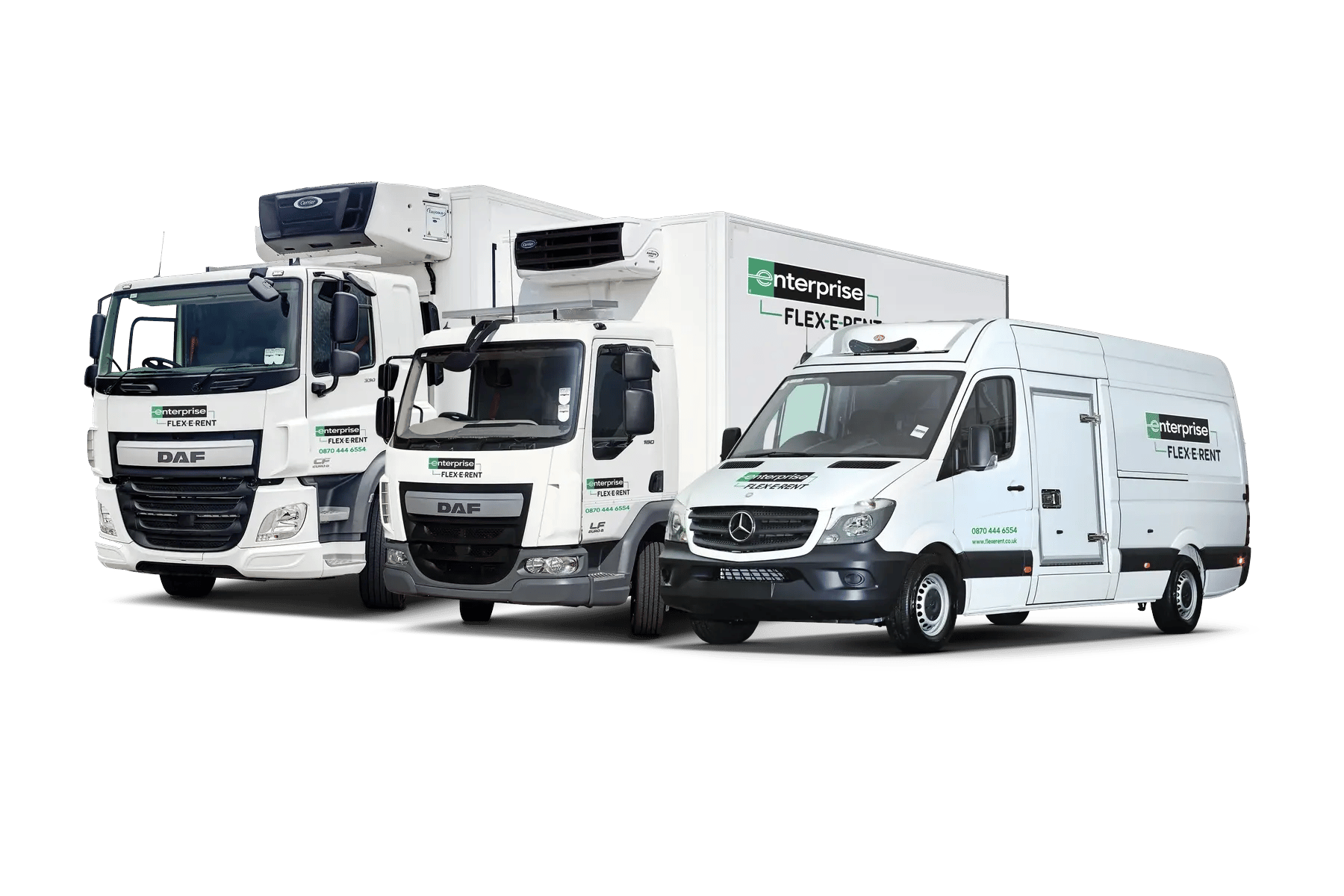
Although they're often referred to collectively as "fridge vans", refrigerated vehicles are available in many different sizes and configurations, ranging from compact city vans through to articulated trailers capable of transporting multiple temperature zones simultaneously.
The exact specification depends on factors such as payload, delivery frequency, operating environment and the temperature requirements of the products being carried.
The seven core components of a refrigerated vehicle
Although refrigerated vehicles vary in size and specification, most are built around the same fundamental engineering principles.
|
Component |
Purpose |
Why it matters |
|
Insulated body |
Reduces heat transfer between the cargo area and the outside environment. |
Maintains stable temperatures while reducing the refrigeration unit's workload. |
|
Refrigeration unit |
Removes heat from the cargo area to maintain the required temperature. |
The heart of the vehicle's cooling system. |
|
Compressor |
Compresses refrigerant gas to begin the cooling cycle. |
Drives the refrigeration process. |
|
Condenser |
Releases heat removed from the cargo compartment. |
Allows refrigerant to return to a liquid state. |
|
Evaporator |
Absorbs heat from inside the cargo area. |
Creates the cooling effect that protects temperature-sensitive products. |
|
Temperature control system |
Continuously monitors and adjusts internal conditions. |
Helps maintain accurate, consistent temperatures throughout each journey. |
|
Insulated doors & seals |
Prevent unwanted heat entering during transport. |
Supports energy efficiency and temperature stability, particularly during multi-drop deliveries. |
Refrigerated vs insulated vehicles: what's the difference?
One of the most common misconceptions is that insulated vehicles and refrigerated vehicles are the same thing. While both are designed to reduce temperature changes, they perform very different roles.
|
Feature |
Insulated vehicle |
Refrigerated vehicle |
|
Active cooling |
No |
Yes |
|
Insulated body |
Yes |
Yes |
|
Refrigeration unit |
No |
Yes |
|
Suitable for long journeys |
Limited |
Yes |
|
Maintains specific temperatures |
Only for short periods |
Yes |
|
Suitable for frozen goods |
No |
Yes |
An insulated vehicle slows the rate at which temperatures change but cannot actively cool its cargo. It is generally suitable only for shorter journeys or products that require limited temperature protection.
A refrigerated vehicle, by contrast, uses an active refrigeration system to remove heat continuously, enabling it to maintain precise temperatures over longer distances and varying weather conditions.
This distinction is particularly important for businesses transporting fresh food, pharmaceuticals or other products with strict temperature requirements, where active cooling forms part of wider food safety or regulatory compliance procedures.
Understanding ATP construction
When discussing refrigerated vehicles, you'll often encounter the term ATP.
ATP refers to the Agreement on the International Carriage of Perishable Foodstuffs and on the Special Equipment to be Used for such Carriage. Developed under the United Nations Economic
Commission for Europe (UNECE), it establishes internationally recognised standards for insulated, refrigerated and heated vehicles used in the transport of perishable foodstuffs.
For qualifying international movements, ATP-certified vehicles must meet specific performance requirements for insulation and refrigeration capability, with certification verified through testing and inspection. Businesses transporting perishable food internationally by road should understand when ATP applies and what documentation may be required.
We'll explore ATP regulations, certification and compliance in detail later in this guide.
Learn more:
Why vehicle specification matters
Choosing the right refrigerated vehicle is about far more than selecting a van with a cooling unit.
Factors such as insulation quality, refrigeration capacity, airflow design, door configuration, payload, operating temperature, delivery frequency and ambient conditions all influence how effectively a vehicle can maintain the cold chain.
For example, a multi-drop grocery operation may prioritise rapid temperature recovery after frequent door openings, while a pharmaceutical distributor may place greater emphasis on precise temperature control, continuous monitoring and comprehensive audit trails.
Understanding these requirements at the outset helps businesses select a vehicle that supports operational efficiency, product integrity and long-term compliance - rather than simply meeting the minimum cooling requirement.
How Refrigerated Vehicles Actually Work
There's a lot more happening behind the scenes with a refrigerated vehicle.
Every refrigerated van or truck relies on a carefully balanced refrigeration system that continuously removes heat from the load space. It doesn't "pump cold air" into the vehicle. Instead, it extracts heat from inside the cargo area and releases it outside.
The better this process works, the more stable your cargo temperature remains.
The refrigeration cycle explained
Every refrigerated vehicle uses the same basic cooling process.
It works in four stages:
|
Stage |
What happens |
|
1. Compression |
The compressor pressurises the refrigerant gas, increasing its temperature. |
|
2. Condensation |
The hot refrigerant passes through the condenser, where heat is released to the outside air and the gas becomes a liquid. |
|
3. Expansion |
The liquid refrigerant passes through an expansion valve, causing a rapid drop in pressure and temperature. |
|
4. Evaporation |
The refrigerant absorbs heat from inside the load space through the evaporator before returning to the compressor to repeat the cycle. |
Although the process sounds complex, the principle is straightforward. The refrigeration unit continuously removes heat from the cargo area. As long as the system can remove heat faster than it enters the vehicle, the desired temperature can be maintained.

Why insulation matters just as much as refrigeration
Many people focus on the refrigeration unit, but the insulation is equally important. Without effective insulation, the cooling system has to work much harder to maintain temperature. That means:
- Higher fuel or energy consumption
- Increased wear on the refrigeration unit
- Slower temperature recovery
- Reduced efficiency in hot weather
Modern refrigerated bodies use high-performance insulated panels designed to minimise heat transfer. High-quality door seals and insulated floors also help prevent warm air entering the load space.
Think of it like a vacuum flask. The better it's insulated, the longer it keeps its contents at the desired temperature.
Airflow is just as important as cooling
Keeping products at the right temperature goes beyond just generating cold air, because that air needs to circulate freely throughout the load space. If airflow is restricted, some areas may become warmer than others, increasing the risk of temperature fluctuations.
To maintain consistent cooling, avoid:
- Blocking the evaporator or air return vents
- Overloading the vehicle
- Packing goods tightly against the roof or walls
Simple loading practices like these help the refrigeration system work more efficiently while maintaining a consistent temperature throughout the journey.
A powerful refrigeration unit can't compensate for poor loading.
Correct airflow is one of the simplest ways to improve temperature consistency and reduce unnecessary strain on the refrigeration system.
What is pull-down time?
Pull-down time is the time it takes for a refrigerated vehicle to reach its target temperature after the refrigeration unit is switched on. It can be affected by outside temperatures, insulation quality, refrigeration capacity, door openings and whether the load has already been pre-cooled.
It's important to remember that refrigerated vehicles are designed to maintain product temperatures, not cool warm goods. Loading products that haven't been pre-chilled can increase pull-down times and affect product quality.
What is electric standby?
Many refrigerated vehicles are equipped with electric standby, allowing the refrigeration unit to run from an external power supply while the vehicle is parked. This helps maintain the required temperature during loading or overnight storage, while reducing fuel consumption, emissions and wear on the refrigeration unit. As fleets look to improve efficiency and reduce environmental impact, electric standby is becoming an increasingly valuable feature.
Modern refrigeration systems are becoming smarter
Today's refrigerated vehicles do much more than cool.
Many systems now include:
|
Technology |
Benefit |
|
Digital temperature controllers |
More precise temperature management |
|
Remote temperature monitoring |
Live visibility of cargo conditions |
|
GPS integration |
Location and temperature tracking in one platform |
|
Automatic alerts |
Notifications if temperatures move outside set limits |
|
Data logging |
Supports compliance and audit requirements |
|
Predictive diagnostics |
Helps identify maintenance issues before they cause downtime |
These technologies are helping operators improve product protection, reduce waste and demonstrate compliance throughout the cold chain.

Why temperature consistency matters
Maintaining a stable temperature isn't just about protecting the product.
It's also about protecting your business.
Temperature fluctuations can lead to:
- reduced shelf life
- increased food waste
- rejected deliveries
- customer complaints
- compliance issues
- reputational damage
For sectors such as pharmaceuticals and healthcare, temperature control is even more critical, as some medicines must remain within tightly defined ranges to preserve their quality and effectiveness.
That's why refrigerated vehicles have evolved from simple transport assets into an essential part of modern cold chain management.
Further reading
For more detailed guidance on refrigerated transport, temperature-controlled logistics and compliance, the following resources are excellent starting points:
- Cold Chain Federation – Industry guidance, reports and cold chain best practice
- Food Standards Agency (FSA) – Food safety guidance for food businesses
- GOV.UK – ATP rules on carrying perishable foodstuffs in road vehicles
Types of Refrigerated Vehicles
Not every refrigerated vehicle is built for the same job. The right choice depends on what you're transporting, how much you're carrying, your delivery schedule and the temperatures you need to maintain.
A florist making city-centre deliveries has very different requirements from a supermarket distributor or pharmaceutical logistics provider.
Understanding the strengths of each vehicle type makes it easier to choose a solution that supports both operational efficiency and product protection.
|
Vehicle type |
Typical use |
Typical payload* |
Best suited to |
|
Small refrigerated van |
Urban deliveries |
Up to 800 kg |
Florists, pharmacies, meal delivery |
|
Medium refrigerated van |
Multi-drop routes |
800–1,200 kg |
Catering, food wholesalers, healthcare |
|
Large refrigerated van |
Regional distribution |
1,200–1,500 kg |
Grocery, hospitality, food production |
|
Luton refrigerated van |
High-volume deliveries |
Up to 1,200 kg |
Bakery, events, catering equipment |
|
7.5-tonne refrigerated truck |
Regional logistics |
Up to 3,500 kg |
Foodservice, retail distribution |
|
Rigid refrigerated truck |
High-capacity transport |
Varies |
Manufacturing, wholesale distribution |
|
Refrigerated trailer |
Long-distance logistics |
Up to 26 pallets (configuration dependent) |
National distribution and large-scale cold chain operations |
*Payloads vary by manufacturer, body specification and refrigeration equipment. Always refer to the vehicle manufacturer's specifications before making operational decisions.
The next section explores the key differences between chilled, frozen and multitemperature transport, and why selecting the correct temperature profile is just as important as choosing the right vehicle.
Chilled vs Frozen vs Multi-Temperature Vehicles
Not all refrigerated vehicles operate at the same temperature.
The right specification depends entirely on what you're transporting. Fresh produce, frozen food and pharmaceuticals all have different storage requirements, and using the wrong temperature profile can affect product quality, safety and compliance.
Temperature comparison
|
Temperature type |
Typical range* |
Common products |
Typical industries |
|
Chilled |
+2°C to +8°C |
Fresh food, dairy, flowers, medicines |
Foodservice, retail, healthcare |
|
Frozen |
-18°C or below |
Frozen food, ice cream |
Food manufacturing, wholesale, supermarkets |
|
Multitemperature |
Multiple zones |
Mixed chilled & frozen loads |
Grocery, catering, multi-drop logistics |
*Temperature requirements vary by product and manufacturer guidance.
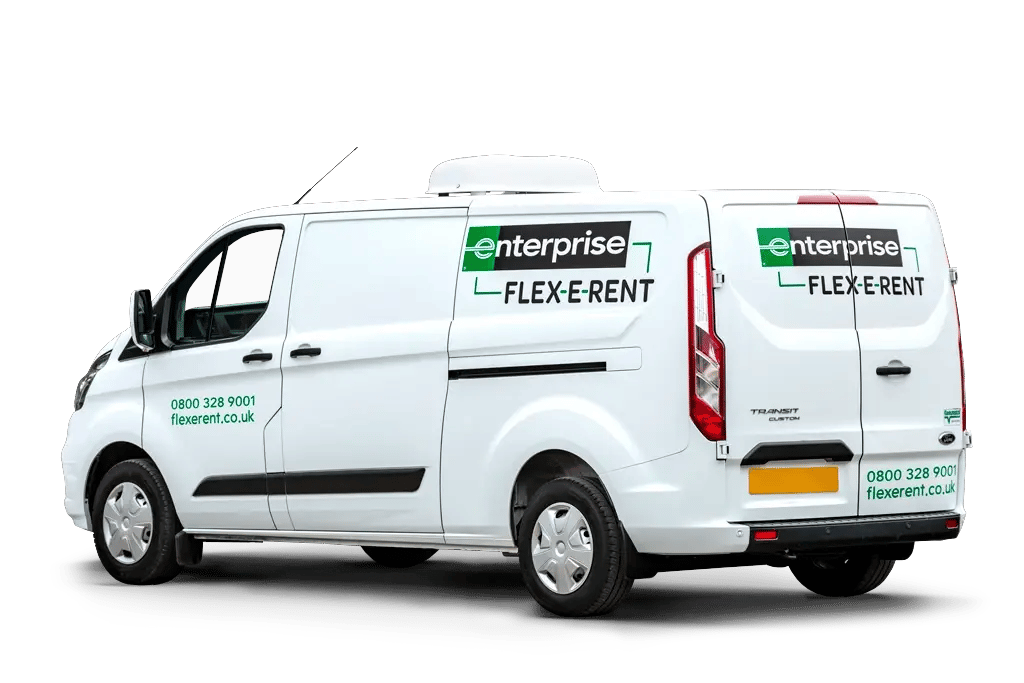
Chilled transport
Chilled vehicles are designed to keep products cool without freezing them. They're commonly used for fresh food, dairy, prepared meals, flowers and certain pharmaceutical products. Maintaining a stable chilled temperature helps preserve freshness, extend shelf life and reduce waste throughout the supply chain.
Frozen transport
Frozen vehicles maintain temperatures of -18°C or below, helping preserve products over longer periods.
They're typically used for frozen food distribution, manufacturing and retail supply chains where maintaining a consistent frozen environment is essential.
Multi-temperature vehicles
Some businesses need to transport chilled and frozen products on the same route.
Multi-temperature vehicles use insulated compartments and independent refrigeration controls to maintain different temperature zones within the same load space. This reduces the need for multiple vehicles and improves delivery efficiency.
Which option is right for your business?
|
If you transport... |
Recommended vehicle |
|
Fresh produce, dairy or flowers |
Chilled |
|
Frozen food |
Frozen |
|
Mixed grocery deliveries |
Multi-temperature |
Key takeaway: The best refrigerated vehicle is the one that maintains the correct temperature for your products, consistently and efficiently.
Single-Temperature vs Multi-Temperature Vehicles
The right refrigerated vehicle depends on what you're transporting.
If your load requires one consistent temperature, a single-temperature vehicle is often the most efficient choice. For mixed loads, multi-temperature vehicles allow chilled and frozen products to be transported together in separate temperature-controlled compartments.
At a glance
|
Feature |
Single-temperature |
Multi-temperature |
|
Temperature zones |
One |
Two or more |
|
Best for |
Single-product deliveries |
Mixed chilled & frozen loads |
|
Typical users |
Food manufacturers, florists, healthcare |
Supermarkets, wholesalers, catering |
Multi-temperature vehicles use insulated partitions and independent refrigeration controls to maintain different temperatures within the same load space, helping improve route efficiency and reduce the need for multiple vehicles.
Key takeaway: If your operation regularly transports products with different temperature requirements, a multi-temperature vehicle can help maximise fleet efficiency.
Industries That Depend on Refrigerated Vehicles
Temperature-controlled transport supports a wide range of industries where product quality, safety and compliance depend on maintaining the correct temperature throughout the journey.
|
Industry |
Typical products |
|
Food manufacturing |
Dairy, meat, seafood, ready meals |
|
Food wholesale & retail |
Fresh, chilled & frozen goods |
|
Catering & hospitality |
Prepared food, ingredients, event catering |
|
Pharmaceuticals & healthcare |
Medicines, vaccines, medical supplies |
|
Floristry |
Fresh flowers & plants |
|
Agriculture |
Fresh fruit, vegetables & produce |
|
Retail & e-commerce |
Grocery and temperature-sensitive deliveries |
Although every sector has different operational requirements, the objective is the same: maintain product integrity, minimise waste and support compliance across the cold chain.
Cold Chain Logistics Explained
A refrigerated vehicle is just one part of the cold chain.
The cold chain is the end-to-end process of keeping temperature-sensitive products within their required temperature range from production to final delivery. If one stage fails, the integrity of the entire shipment can be compromised.
Whether you're transporting fresh food, pharmaceuticals or flowers, maintaining an unbroken cold chain helps protect product quality, reduce waste and support regulatory compliance.
The five stages of the cold chain
|
Stage |
Why it matters |
|
Storage |
Products are held at the correct temperature before dispatch. |
|
Loading |
Goods should be transferred quickly to minimise temperature exposure. |
|
Transport |
Refrigerated vehicles maintain the required temperature throughout the journey. |
|
Delivery |
Efficient unloading helps prevent unnecessary temperature fluctuations. |
|
Monitoring |
Temperature records provide evidence that the cold chain has been maintained. |
Every stage plays an important role. Even a well-maintained refrigerated vehicle can't compensate for poor loading practices or delays during delivery.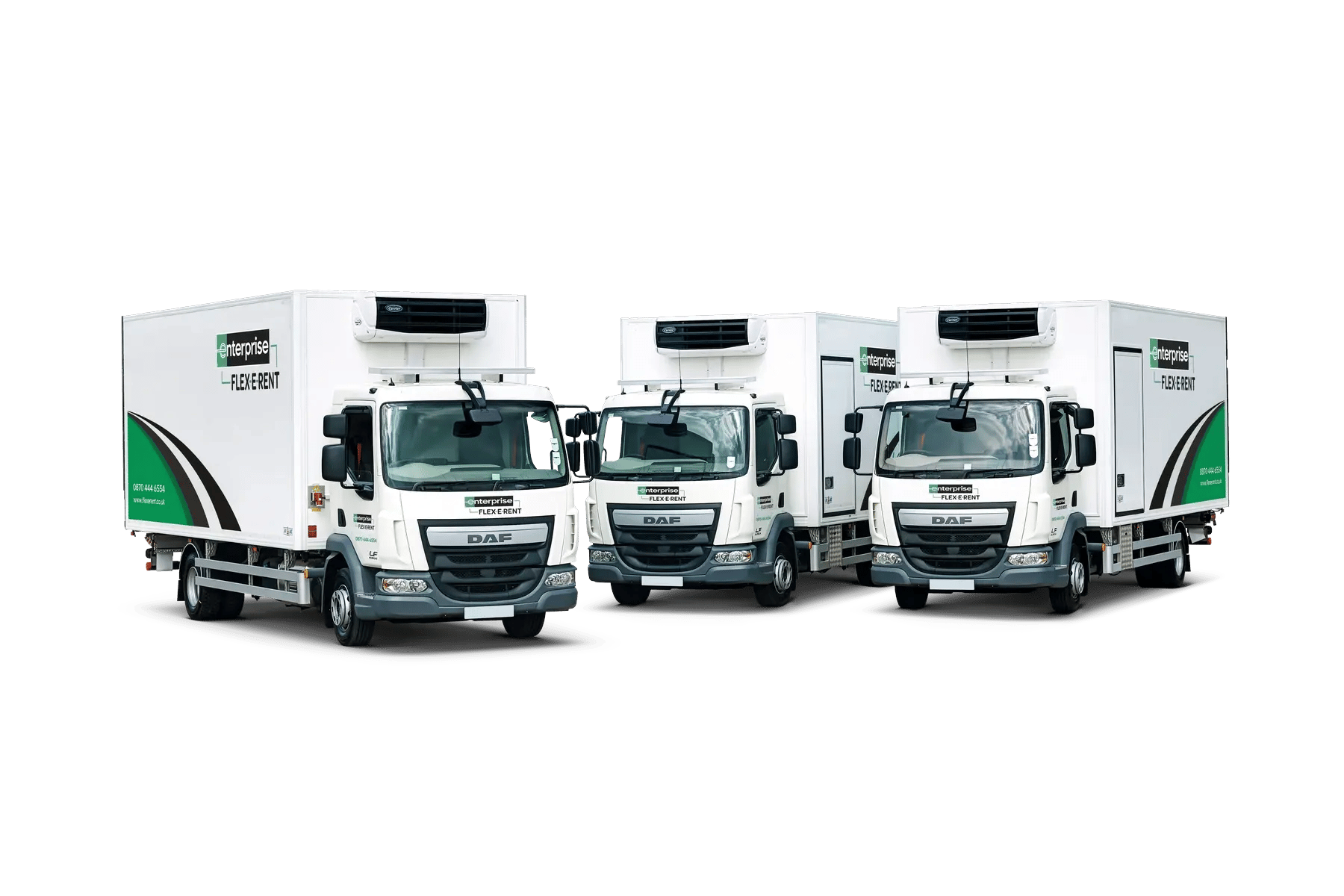
Why temperature consistency matters
It's not just about keeping products cold. It's about keeping them at the right temperature.
Temperature fluctuations can lead to:
- Reduced product quality
- Shorter shelf life
- Increased food waste
- Rejected deliveries
- Compliance issues
For pharmaceutical products, poor temperature control may also affect product stability, making continuous monitoring particularly important.
How businesses protect the cold chain
Maintaining the cold chain relies on more than just the vehicle itself. It requires the right equipment, processes and people.
Best practice includes:
- Pre-cooling products before loading
- Minimising door openings
- Loading vehicles efficiently
- Monitoring temperatures throughout the journey
- Servicing refrigeration equipment regularly
- Training drivers and warehouse teams
Together, these measures help reduce risk and improve delivery reliability.
A refrigerated vehicle is only one link in the cold chain. Consistent processes before, during and after transport are just as important.
Further reading
- Cold Chain Federation – Food Safety Central Guidance
- Food Standards Agency (FSA) – Food safety guidance for businesses
Refrigerated Vehicle Regulations in the UK
Refrigerated vehicles are subject to a range of regulations designed to protect food safety, product quality and public health.
The exact requirements depend on what you're transporting and where it's travelling, but understanding the key standards can help businesses reduce risk and maintain compliance.
What is ATP?
One of the most important regulations for refrigerated transport is ATP (Agreement on the International Carriage of Perishable Foodstuffs and on the Special Equipment to be Used for such Carriage).
Developed by the United Nations Economic Commission for Europe (UNECE), ATP sets performance standards for insulated, refrigerated and heated vehicles used to transport certain perishable foodstuffs internationally.
Vehicles covered by ATP must meet specific insulation and refrigeration performance standards and carry valid certification.
When does ATP apply?
ATP primarily applies to the international road transport of certain perishable foodstuffs between countries that have adopted the agreement.
While ATP isn't generally required for domestic UK food transport, many operators choose ATP-certified vehicles because they provide recognised performance standards and may support cross-border operations.
As requirements vary depending on the goods being transported and the journey being undertaken, businesses should always check the latest official guidance.
ATP at a glance
|
Requirement |
Summary |
|
Applies to |
Certain international movements of perishable food |
|
Covers |
Insulated, refrigerated & heated vehicles |
|
Managed by |
UNECE |
|
UK guidance |
Available through GOV.UK |
Where to find official guidance
For the latest information on ATP requirements, certification and vehicle standards, refer to the official guidance below.
GOV.UK - ATP rules on carrying perishable foodstuffs in road vehicles
UNECE - Agreement on the International Carriage of Perishable Foodstuffs (ATP)
Understanding ATP helps businesses choose suitable refrigerated vehicles for international food transport and demonstrates a commitment to recognised temperature-controlled transport standards.
Refrigerants Explained
Refrigerants are the working fluids that allow a refrigeration system to remove heat and maintain the required temperature inside a refrigerated vehicle.
As environmental regulations continue to evolve, many operators are replacing older refrigerants with alternatives that have a lower Global Warming Potential (GWP).
Common refrigerants
|
Refrigerant |
Typical use |
Notes |
|
R404A |
Older refrigeration systems |
High GWP and being phased down under F-Gas regulations. |
|
R452A |
Modern transport refrigeration |
Lower GWP alternative to R404A, widely adopted across the industry. |
|
R744 (CO₂) |
Emerging refrigeration systems |
Natural refrigerant with a very low GWP, gaining interest for future transport refrigeration. |
The move towards lower-GWP refrigerants is being driven by updated F-Gas regulations, which aim to reduce the environmental impact of fluorinated greenhouse gases.
When planning fleet investments, businesses should consider not only today's requirements but how future refrigerant regulations may affect servicing, maintenance and long-term operating costs.
Key takeaway: Choosing modern refrigeration equipment can help future-proof your fleet as refrigerant regulations continue to evolve.
Further reading
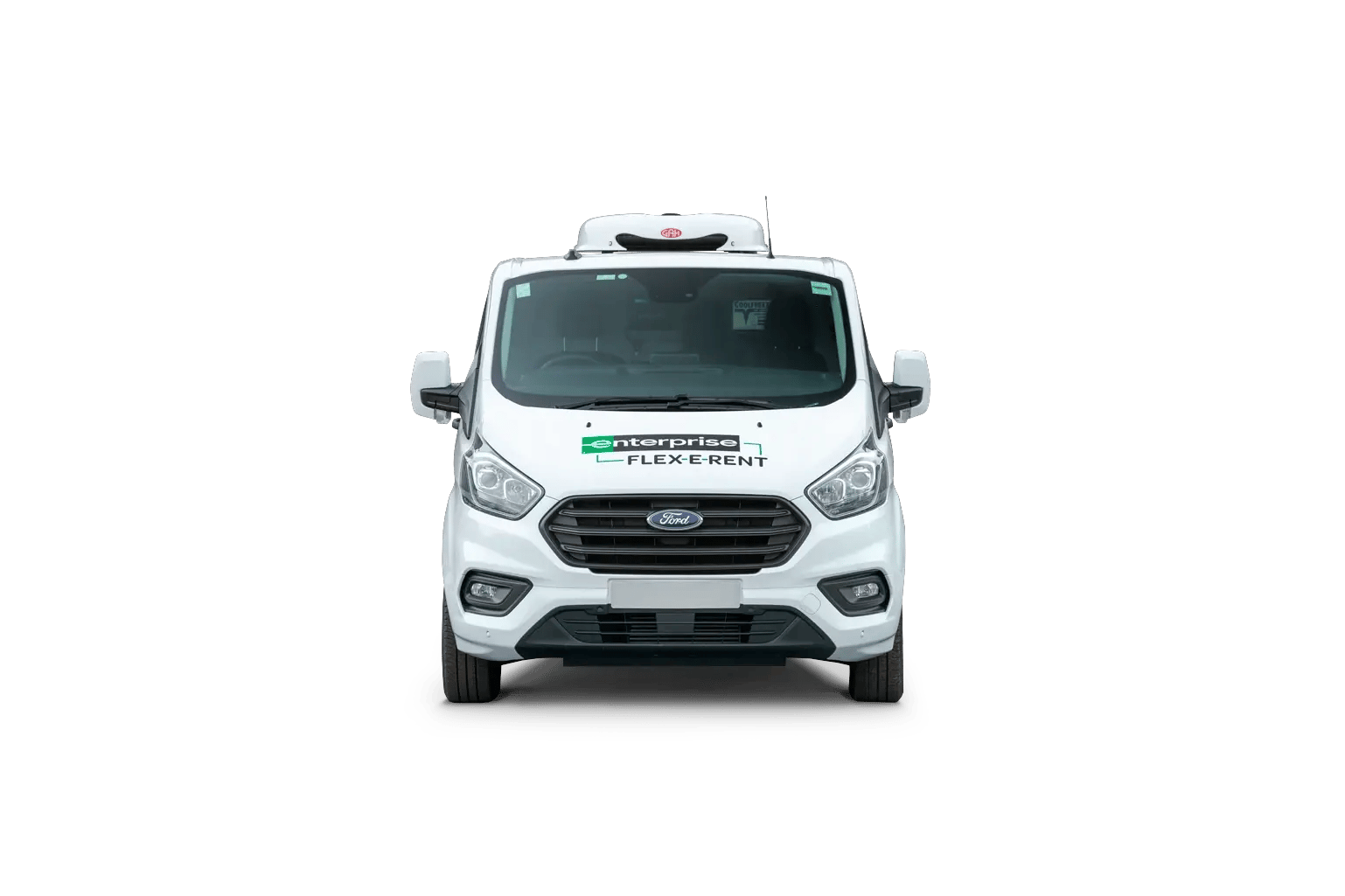
Electric Refrigerated Vehicles
Like the wider commercial vehicle market, refrigerated transport is beginning to transition towards lower-emission technologies.
While diesel remains the most common option today, manufacturers are investing heavily in electric refrigerated vans, battery-powered refrigeration units and alternative energy sources to help operators reduce emissions.
What to consider
|
Consideration |
Why it matters |
|
Vehicle range |
Refrigeration systems also consume energy, so route planning is essential. |
|
Charging infrastructure |
Depot charging is often the most practical solution for regular operations. |
|
Electric standby |
Allows refrigeration units to operate without running the vehicle. |
|
CAZ & ULEZ compliance |
Electric vehicles can help businesses operating in low-emission zones. |
|
Future legislation |
Businesses should consider how fleet decisions align with longterm sustainability goals. |
Although electric refrigerated vehicles continue to evolve, they are already proving effective for many urban and regional delivery operations. The Cold Chain Federation continues to work with industry to explore the transition towards lower-emission temperature-controlled transport and refrigeration technologies.
Electric refrigerated vehicles aren't suitable for every operation yet, but they're becoming an increasingly viable option for businesses with predictable routes and depot-based charging.
Further reading
Telematics & Smart Refrigerated Vehicles
Today's refrigerated vehicles do much more than maintain temperature. Connected technology gives fleet managers greater visibility over vehicle performance, helping protect the cold chain and reduce downtime.
Common features include:
- GPS tracking to monitor vehicle location and route progress.
- Real-time temperature monitoring to identify issues before products are affected.
- Door sensors to record openings and minimise temperature loss.
- Automated alerts if temperatures move outside the required range.
- Cloud-based reporting to support audits and compliance.
- Predictive maintenance to identify potential faults before they lead to breakdowns.
As these technologies continue to evolve, many operators are combining telematics with AIdriven analytics to improve fleet efficiency, reduce waste and make better-informed operational decisions.
Smart refrigerated vehicles don't just transport temperature-sensitive goods, they provide the data needed to manage the cold chain more efficiently.
Choosing the Right Refrigerated Vehicle
Choosing a refrigerated vehicle isn't just about payload or temperature. The right solution depends on your products, delivery profile, operational requirements and long-term fleet strategy.
Before selecting a vehicle, consider:
- What temperature range do your products require?
- Will you transport chilled, frozen or mixed loads?
- How many deliveries will you make each day?
- What payload and load space do you need?
- Will you operate in urban areas, nationally or both?
- Are there compliance or environmental requirements to consider?
Quick guide
|
If you need to... |
Consider... |
|
Deliver fresh food or pharmaceuticals |
A chilled refrigerated vehicle |
|
Transport frozen products |
A frozen specification |
|
Carry mixed loads |
A multi-temperature vehicle |
|
Make frequent urban deliveries |
A compact refrigerated van |
|
Move larger volumes |
A refrigerated truck or trailer |
Buy or hire?
For many businesses, hiring offers greater flexibility than purchasing outright, particularly when demand changes or fleet requirements evolve.
|
Buying |
Hiring |
|
High upfront investment |
Preserves working capital |
|
Responsible for servicing & maintenance |
Servicing and maintenance typically included |
|
Vehicle depreciation risk |
No ownership or resale concerns |
|
Harder to adapt fleet size |
Scale your fleet as requirements change |
|
Responsible for replacing ageing vehicles |
Access to modern, compliant vehicles |
For organisations managing seasonal demand, contract growth or vehicle replacement, hiring can also provide greater cost certainty through predictable operating costs while reducing the administrative burden of fleet ownership.
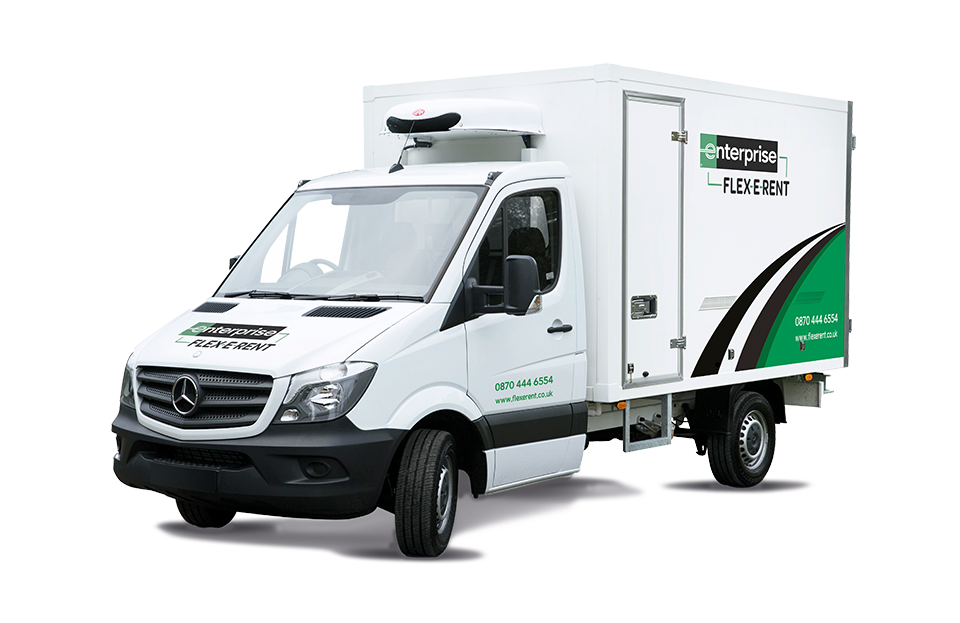
Common Mistakes to Avoid with Refrigerated Vehicles
Even the best refrigerated vehicle can't compensate for poor operating practices. Small mistakes can affect product quality, increase costs and put the cold chain at risk.
Some of the most common include:
- Loading warm products instead of pre-chilled goods, increasing pull-down time and putting unnecessary strain on the refrigeration unit.
- Blocking airflow by overloading the vehicle or stacking goods against the evaporator or air vents.
- Leaving doors open for longer than necessary during loading and deliveries, allowing warm air to enter the load space.
- Skipping routine maintenance, which can increase the risk of breakdowns and inconsistent temperature control.
- Choosing the wrong vehicle specification, such as using a single-temperature vehicle for mixed chilled and frozen loads.
- Failing to monitor temperatures, making it difficult to identify issues or demonstrate compliance when required.
Most of these risks can be reduced through good vehicle specification, regular maintenance, effective loading procedures and continuous temperature monitoring.
The Future of Refrigerated Transport
The refrigerated transport industry is evolving quickly. Advances in vehicle technology, connected fleets and environmental regulations are changing how temperature-controlled goods are moved across the UK.
While the pace of change will vary by sector, several trends are already shaping the future of refrigerated transport.
Lower-emission refrigeration
Manufacturers are investing in lower-emission refrigeration systems, alternative refrigerants and electric standby technology to help reduce environmental impact while maintaining reliable temperature control.
Connected vehicles
Real-time temperature monitoring, telematics and cloud-based reporting are becoming standard features across many refrigerated fleets, giving operators greater visibility and helping protect the cold chain.
Smarter fleet management
Fleet data is becoming increasingly valuable. Predictive maintenance, AI-powered analytics and route optimisation are helping businesses improve uptime, reduce waste and make better-informed operational decisions.
A greater focus on compliance
As regulations continue to evolve, businesses are placing greater emphasis on vehicle specification, maintenance and documented temperature records. Choosing modern, wellmaintained vehicles can help organisations adapt more easily to changing operational and regulatory requirements.
As technology and regulations continue to evolve, businesses that invest in the right vehicles, processes and fleet strategy will be better placed to adapt to changing customer expectations and the future of temperature-controlled transport.
Popular content


Flexible Rental Guide
Fleet decisions aren’t just about vehicles, they’re about risk, cost, and how ready you are for change.
That’s why this guide helps you break down the pros and cons of every option, so you can make confident, future-ready choices for your business.